
Ozark, MO · Garage Door Service
Garage Door Maintenance for Sparta, MO Homes
Sparta's houses date mostly to the mid-1990s building boom, which means original torsion hardware is now 25-30 years old. Here's what that means for upkeep.
- Repairs & new doors
- Springs & openers
- Serving 6 nearby communities
What Causes It Around Here
The fault we see most in Sparta isn't a dramatic spring snap - it's slow fatigue in hardware that's quietly aging out. A torsion spring rated for a certain number of open-close cycles doesn't care how many years pass, only how many times the door has moved, and a spring installed when a house was built has been working for a long time now.
Sparta's housing stock centers on 1995, right in the middle of the broader area's 1956-2010 build range. That year matters because it's when a lot of mid-90s steel sectional doors went up with standard galvanized torsion springs and nylon rollers - parts that were solid for their first fifteen years and are now well past the point where fatigue cracking in the roller stems and spring coil wear start showing up together, on the same door, in the same month.
Spokane's end of our winters adds another layer. In a cold-moderate climate band, cold snaps stiffen lubricant and shrink metal just enough that a spring already near the end of its cycle life is more likely to let go on the coldest morning of the week, not a mild one. That's not bad luck - it's the hardware telling you something it's been telling you for a year or two already.
What the Repair Takes
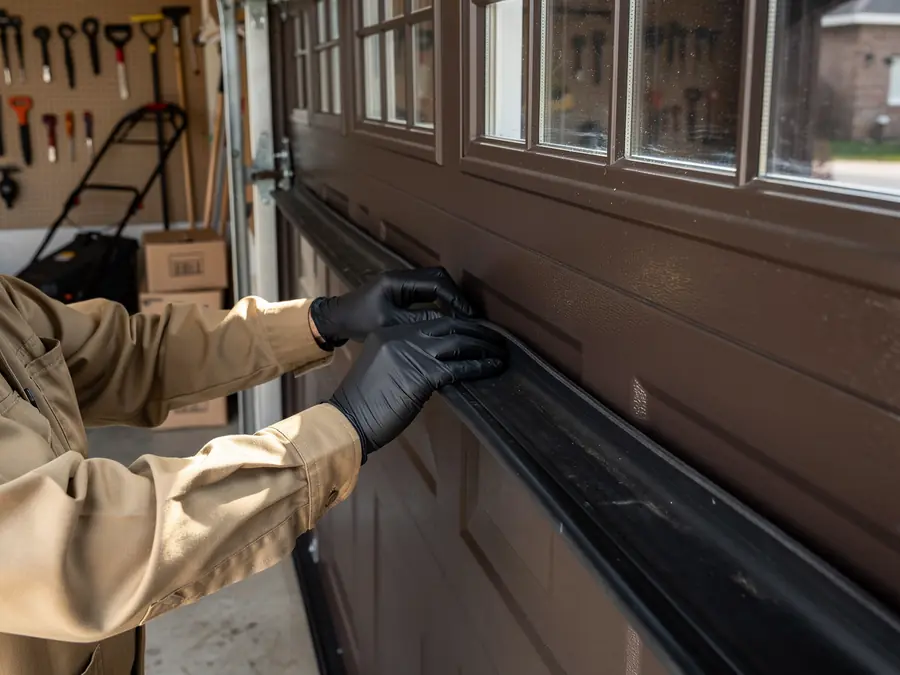
A real maintenance visit on a Sparta door starts with the torsion spring and the cable drums, because that's where age-related wear shows up first on houses from this era. We check spring winding tension, look for flat spots or rust pitting on the coils, and inspect the cable for fraying near the drum - a cable that's starting to fray rarely fails quietly.
Rollers come next. Original nylon rollers from the 1990s building boom tend to crack at the stem rather than the wheel, which is easy to miss on a quick look but obvious once you pull one off. We also check track alignment, since houses settling over 25-plus years can shift a track just enough to cause binding that gets blamed on the opener when it's really the rails.
We lubricate hinges, rollers, and the torsion spring itself with the right product - not household oil, which attracts grit and makes things worse over a winter. If a part is still within its working life, we leave it; maintenance isn't an excuse to sell parts a door doesn't need yet.
How Long It Takes
A standard maintenance visit on a single door doesn't take long once the truck is on site - most of the time goes into inspection, not labor. Lubrication, hardware checks, and a track alignment pass can usually be done in under an hour for a door in normal shape.
What changes the timeline is what we find. A roller that needs swapping or a cable with early fraying adds a bit of time but not much, since those are common parts we carry. What does take longer is a spring that's clearly near the end of its life - that's a separate conversation, not something we push through in the same visit, because torsion spring work needs its own setup and safety checks.
The short version: Sparta is 8 miles from our shop in Ozark, so travel isn't the long part of the day. The inspection itself is quick. It's only when a part needs replacing that the visit runs longer, and we'll tell you that before we start, not after.
What Is on the Truck
We carry the parts that fail most on doors from Sparta's building era: torsion springs in common residential sizes, nylon and steel rollers, lift cables, and the lubricant we actually trust on hinges and springs. For a door built around 1995, those cover the large majority of what we find during a maintenance visit.
We don't carry every spring wire size or every opener part for every brand ever installed - some older or less common hardware has to be special-ordered, and that's the honest limit of a rolling truck stock. If your door needs something unusual, we'll tell you straight that it's a wait, not pretend we can pull it from the van.
For a standard maintenance call, though, the truck is set up to finish the job in one visit: spring adjustment tools, a torque wrench set for proper tension, replacement rollers in the sizes that match 1990s-era tracks, and the hardware to reseat a cable drum that's drifted out of alignment.
The Cost of This Job
We're not going to put a number here that doesn't hold up once a technician is actually looking at your door - cost depends on what we find, and pretending otherwise isn't honest. A visit where everything checks out and just needs lubrication and adjustment is a different job than one where a roller or cable needs swapping.
What we can tell you is how to think about it. Maintenance now is cheaper than the alternative: a spring that fails on a cold morning doesn't just need a spring, it often means a scratched panel from a door that dropped wrong, or a bent track from a cable that let go unevenly. Catching wear early, on hardware that's now pushing three decades old in a lot of Sparta homes, is the cheaper path almost every time.
Median household income here runs around $61,630, and across roughly 956 households in Sparta, the math on a yearly maintenance visit versus an emergency spring replacement usually favors the visit. We'll give you a real number once we've seen the door, not before.
What You Are Seeing
If your door jerks instead of gliding, or one side seems to lag behind the other as it opens, that's usually a spring or cable issue, not the opener. A grinding or squealing sound near the top of the track often points to a roller that's cracked at the stem - common on doors from Sparta's mid-90s building boom that are still running original hardware.
Sagging in the middle of the door, visible when it's down, can mean a bowed section or a track that's shifted slightly after years of settling. A door that reverses right after it starts closing, with no obvious obstruction, is often a sensor alignment issue rather than anything mechanical in the spring system.
None of these need an emergency call by themselves. They're signs worth a maintenance visit before winter, when cold tightens up lubricant and makes any existing wear worse. Catching the sound now, instead of after it stops working altogether, is the whole point of a maintenance visit instead of a repair call.
Frequently asked questions
How often should I get my garage door serviced in Sparta?
For a door built in the mid-1990s like most in Sparta, an annual check before winter makes sense. Cold-moderate winters stiffen lubricant and stress hardware that's already decades into its working life, so catching wear in the fall beats discovering it on a freezing morning.
Is maintenance worth it on an older door, or should I just replace it?
It depends on what the spring, cables, and rollers look like once we're actually there. A lot of 1990s-era doors in Sparta still have good panels and tracks - it's the moving hardware that wears out first, and that's often a repair, not a replacement.
Do you have a shop in Sparta?
No - we run out of Ozark, about 8 miles away, and travel to Sparta for jobs. There's no local branch here, just the truck coming out when you call.
Can I do the lubrication myself between visits?
You can keep hinges and rollers lubricated with a proper garage door lubricant between visits - avoid household oil, which attracts dust and grit. But spring tension and cable wear are worth a professional look, since both involve stored force that's not safe to adjust without the right tools.
Book garage door service in Ozark
Call now or request a quote - tell us what the door is doing and where you are.