
Ozark, MO · Garage Door Service
Is Your Ozark Garage Door Worth Fixing, or Done
Ozark's housing mostly dates 1956-2010, median 1995. Here's how that age and our cold-moderate winters decide whether your door is worth repairing or replacing.
- Repairs & new doors
- Springs & openers
- Serving 6 nearby communities
What the Weather Here Does to It
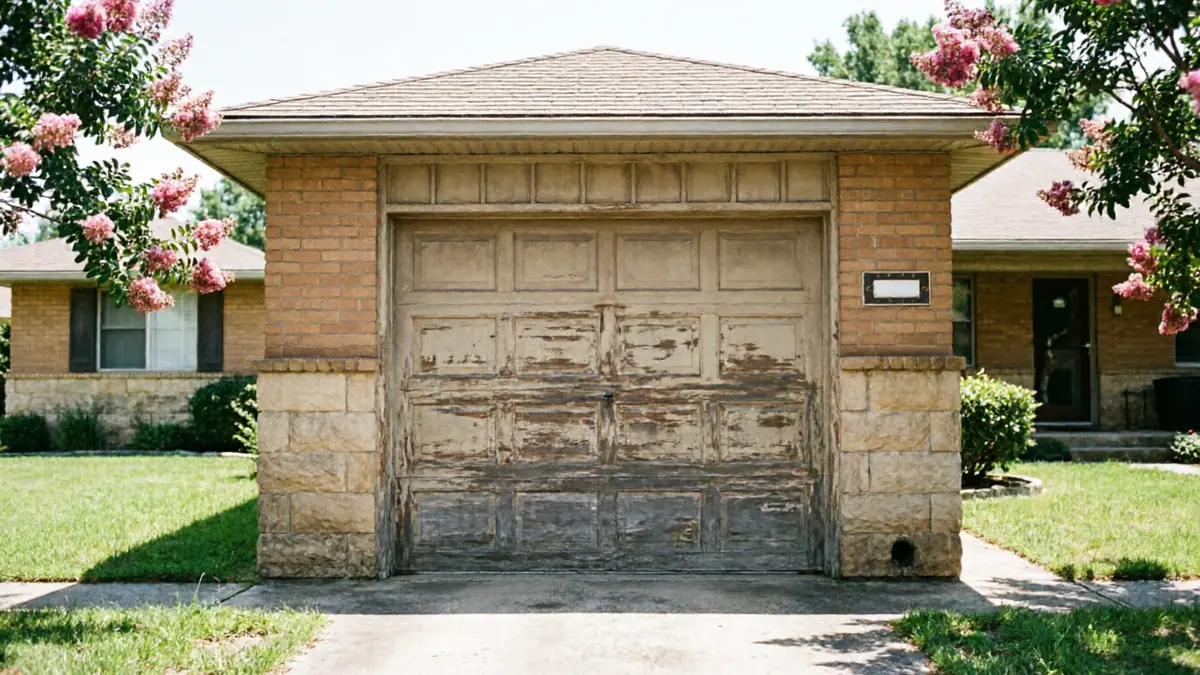
Ozark sits in a cold-moderate climate band, which means the door on your house works through real freeze-thaw swings every winter, not just a few cold mornings. That cycle is hard on steel panels and on the hardware holding them up. Water gets into seams and hinges, freezes, expands, and loosens what used to be tight. On a door from the 1980s or 90s - which describes a lot of what's out there across the eleven areas we work in - that cumulative flexing has usually already taken a toll on the rollers and the bottom seal track even if the panels still look fine from the driveway. A door built to the standards of 1995 wasn't engineered with today's insulation expectations either, so if yours is from that era, cold isn't just wearing it out mechanically - it's also costing you more to heat the space behind it than a newer door would. That combination, age plus climate load, is the real question behind "is it worth fixing," more than how the door looks.
The Situation
Most of the housing stock in this service area was built between 1956 and 2010, with the median landing around 1995, and the bulk of it concentrated in that 1980s-to-90s window across the eleven named areas we cover. That matters because a door's worth-fixing math changes a lot depending on which decade it came from. A door from the 80s is pushing 40-plus years on original hardware - springs, rollers, and the opener motor if it's never been swapped - and at that age, one repair tends to expose the next one within a year or two. A door from the mid-90s or later is a different conversation: the track and frame are usually still true, and a worn spring or a dented panel on a door like that is a straightforward, worth-it repair. We're not going to tell you to replace a door just because it's old if the bones are sound. We are going to tell you when they're not.
Season by Season
Spring is when you notice what winter did - a spring that lost tension over the cold months, a track that's slightly out of alignment from months of expansion and contraction, an opener that's started straining. That's the best time to catch a repair before it becomes a replacement. Summer heat is less dramatic here than the winter swings, but it does dry out old weatherstripping and lubricant on doors that haven't been serviced in a few years, which is common on original hardware from the 80s and 90s stock in this area. Fall is worth a check before the freeze-thaw cycle starts again - a loose roller or a cable with a few frayed strands is cheap to fix in October and expensive to deal with in January after it's failed. Winter itself is when the cold-moderate swings do the actual damage, so it's the season you're reacting to, not catching ahead of, unless you did the fall check.
What to Check
Look at the springs first - if you can see daylight through a gap in a torsion spring or it looks stretched and uneven, that's wear from years of cold-weather cycling, and on an older door it often means the opposite spring isn't far behind. Check the rollers for flat spots or rust, especially on doors from the 1980s and 90s that still have steel rollers instead of nylon. Push on the bottom corners of the panels - if they flex or you see rust starting at the seams, that's the freeze-thaw moisture getting in, and it only gets worse. We'll be straight with you: if the door is from the older end of that 1956-2010 range and you're looking at a second or third repair in two years, replacement usually costs less over time than keep patching it. But if the frame's straight and it's one worn part, fixing it is the right call - we won't push a new door on you when a spring or a roller set is what it actually needs.
Frequently asked questions
How old does a garage door need to be before replacing it makes more sense than repairing it?
It depends more on how many separate things are failing than on the exact year. A door from the 1980s or 90s with one worn spring is worth fixing. The same door needing a spring, rollers, and track work within a couple years is telling you the whole assembly is worn out from decades of cold-weather cycling, and replacement usually pencils out cheaper long-term.
Why do garage doors in Ozark wear out faster than I'd expect?
The cold-moderate climate here means real freeze-thaw cycling most winters, not just occasional cold snaps. That repeated expansion and contraction loosens hardware, dries out seals, and lets moisture into seams, which adds up faster on original hardware from the 1980s and 90s stock common across this area.
Is it worth insulating an older door instead of replacing it?
Sometimes. If the panels and frame are sound, adding insulation can help with the heating cost side of an older door. But a door that's already showing rust at the seams or flex in the panels won't hold insulation well, and in that case the insulation is a short-term fix on a door that needs replacing anyway.
Related garage door services in Ozark
More garage door guides
Book garage door service in Ozark
Call now or request a quote - tell us what the door is doing and where you are.